

Introduction
Simulations of emergency scenarios due to powerful artificial intelligence like AGI (Artificial General Intelligence) describe increased cyberattacks that elevate the risk of cloud data infrastructure. Our experimental specialty consists of deep learning models that forecast extreme weather events such as hurricanes so offline media like M-Disc stores our data as part of our disaster recovery plans because it satisfies flooding resilience from storms. M-Disc is resilient with initial claims of 1000+ years longevity and WORM (Write Once Read Many) archival compliance. This post describes results of another extreme weather event, a blizzard, that more safely tests our data archival and backup strategy.
Questions like, “what will happen to my data if there’s an ice age?” have value when researching how to better prepare, especially after considering time scales in the thousands of years. Here, we present a generalized method to determine the resilience or health of the data; formulated after an experiment where a M-Disc was left out to survive during a blizzard. Utilizing a formula defined later, we can begin to quantify our resilience.
Methodology
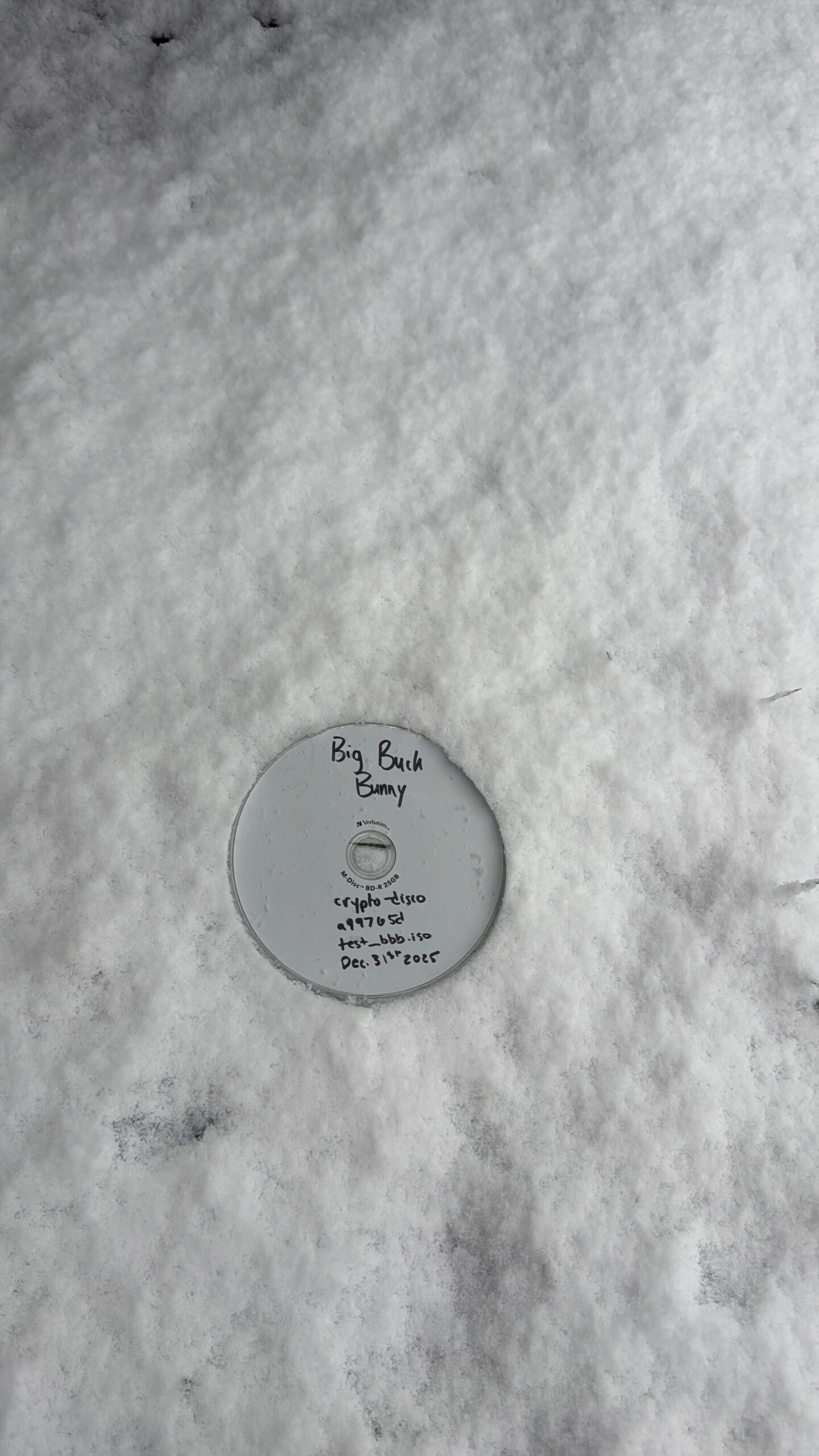
The list of storage media that aren’t water resistant enough for our simulations include USB Drives, SSD, HDD, LTO Tape, among many others. M-Disc’s were utilized for this experiment because of their longevity claims of a Millenia years. These results do not falsify their claims.
Because of this journey, our team developed a breakthrough AI application named Disco. It’s currently available as a M-Disc software suite compatible with Linux, Windows, and Mac for generating optical images and burning them onto a disc. While it’s currently in beta, it already has all-in-one functionality. Advanced algorithms include error correcting codes that self-repairs data and cloning to optimize space on the write-once media. If the data doesn’t fill up the entire space, Disco will make clones until it does.
Conclusion
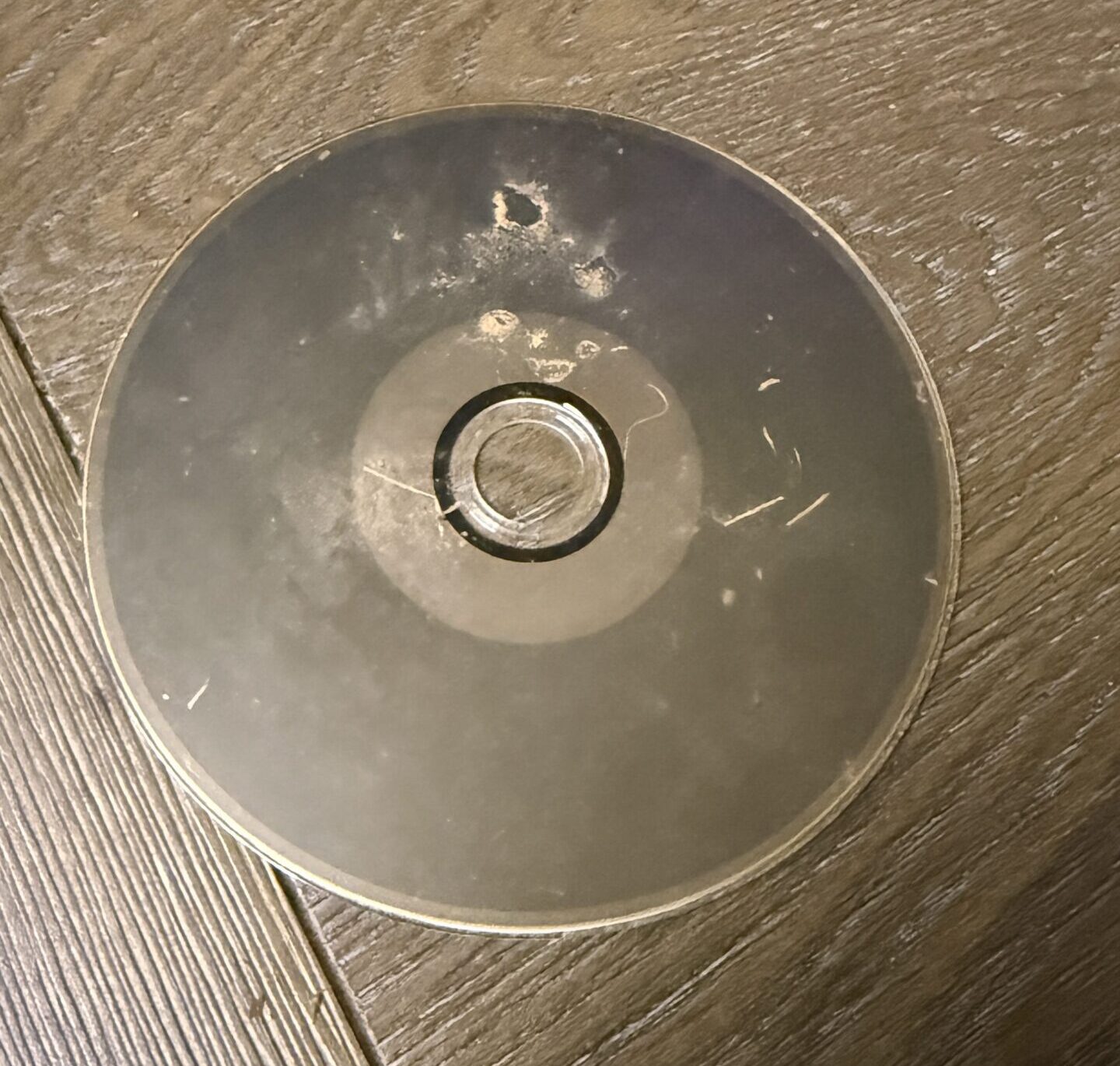
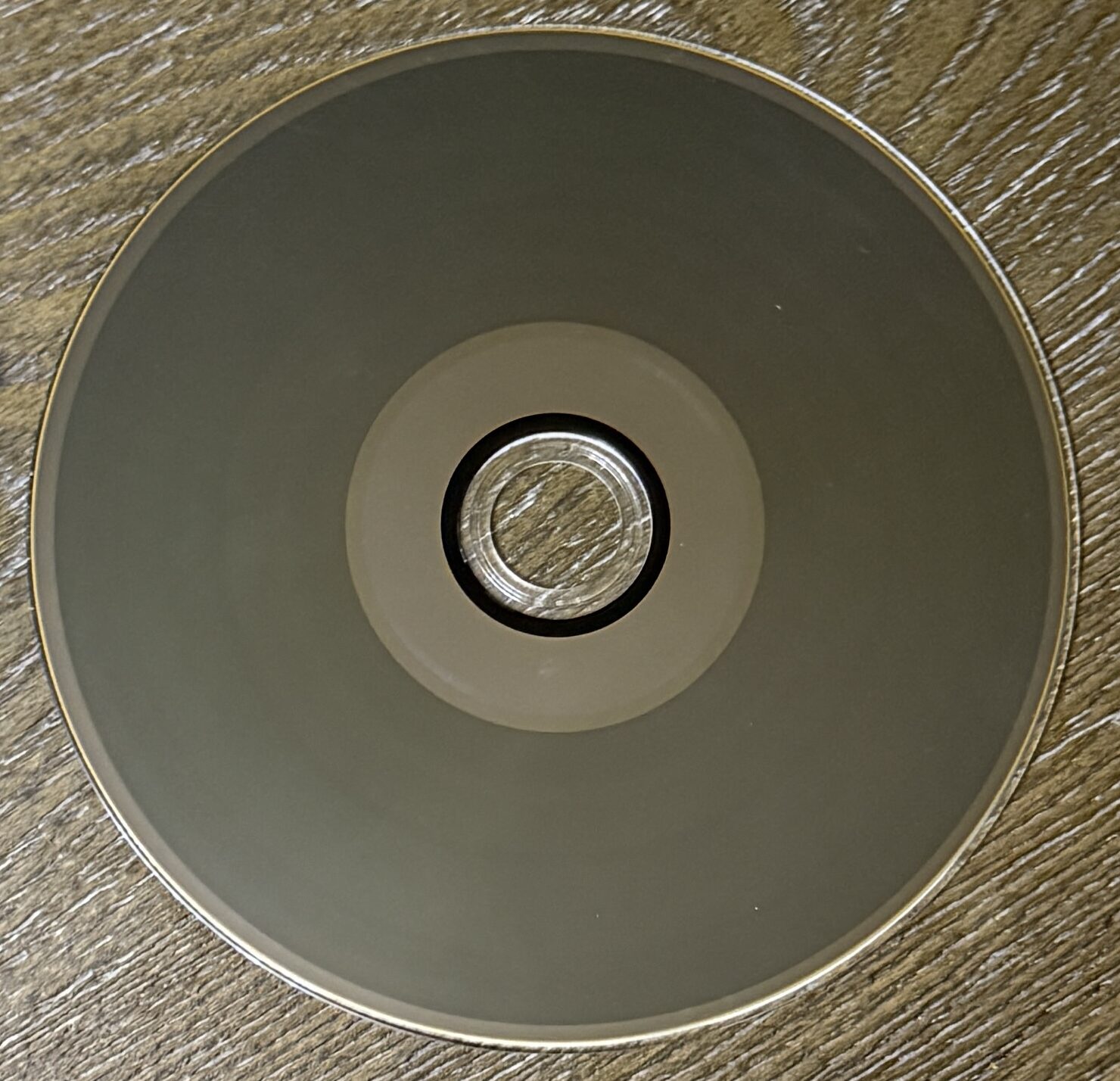
The disc health can be determined by the number of clones that are error free as a proportion of the total number of clones. For the “Big Buck Bunny” video data test case (2160p at 60fps), the total size is 673.2 MB on disk. If we burned it without our software, 20 GB of usable data is wasted. However, the algorithm filled the write-once media (M-Disc BD-R 25GB by Verbatim) with clones such that there are 34 total. After the blizzard, none of them had errors.

Thus, the M-Disc health is indicated by 34/34 error-free clones and a formula that equals 100% health; if there was a scratch on the disc that corrupted 2 of the clones, the disk health is 32/34 or 94.12% healthy.
Discussion
The standard for determining the lifetime for M-Discs are defined by ISO/IEC 10995:2011 that models aging through factors like high temperatures and humidity. Because our experimental setting was a blizzard, it would need to be left outside for a longer time and in different environments to replicate the standard. However, many other offline options for data like USB drives or SSD’s may result in significantly less health.
Future work includes experiments involving different types of media like the ones mentioned to determine the suitability for emergency preparedness of extreme weather events. After ongoing beta testing in complete, the Disco AI application is set to be released as version 1 before the Atlantic hurricane season. Our hope is to contribute to artificial intelligence and its applications in emergency scenario’s.
References
https://www.rand.org/pubs/research_reports/RRA4626-1.html
https://github.com/hammad93/crypto-disco
https://www.finra.org/rules-guidance/rulebooks/finra-rules/4511
https://github.com/hammad93/crypto-disco/issues/1#issuecomment-4052370477